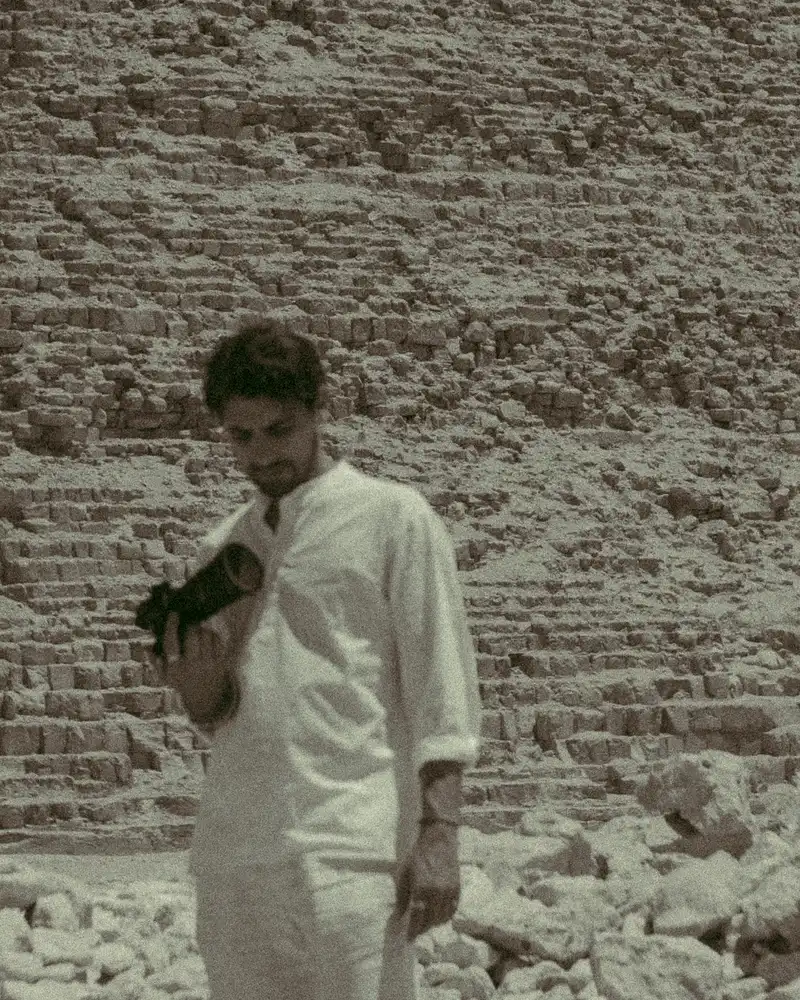
Look past the landmark
Egypt gives you visual scale immediately. Ancient architecture, desert, dense streets and an enormous amount of history are already doing a lot of the work. The challenge is not finding something impressive. It is finding a point of view that feels personal.
I try to use famous places as context rather than the entire subject. A corridor becomes more interesting when someone crosses it. A huge structure becomes easier to understand when the frame contains a human scale. The photograph stops being only about where I was and starts being about what it felt like to stand there.
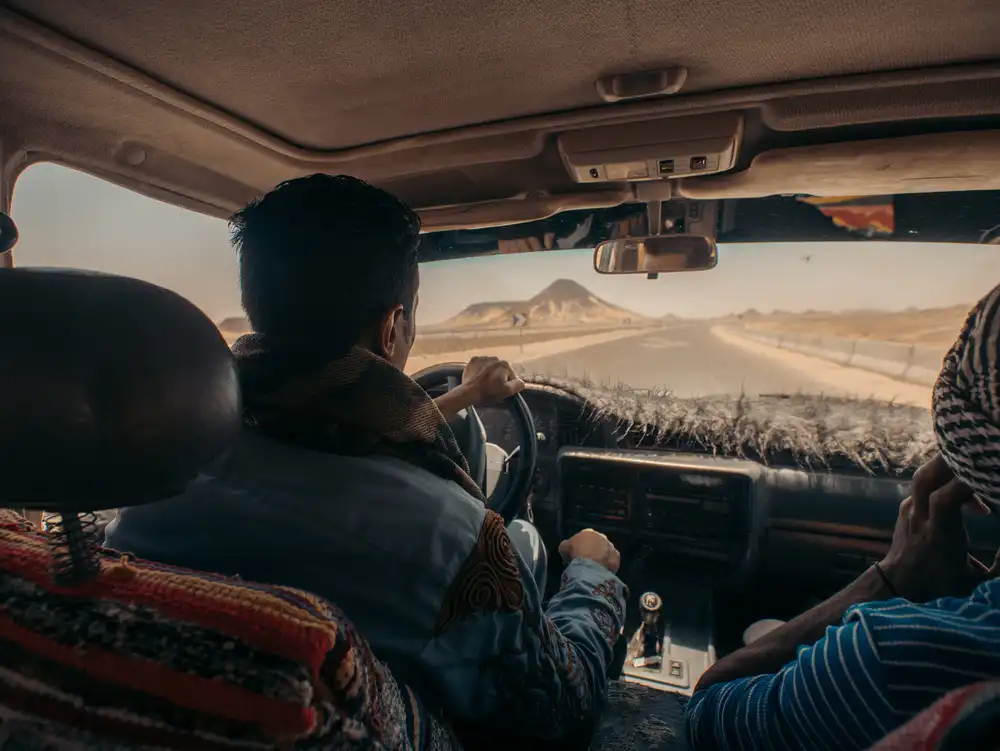
Keep people in the frame
Travel photography becomes generic very quickly when every frame removes the people who actually live in a place. I like photographs where everyday movement stays visible: somebody waiting, walking, talking, working or simply occupying the scene.
Those moments are rarely as predictable as a landmark at sunset, which is exactly why they can carry more memory. They create a relationship between the viewer and the place rather than a checklist.
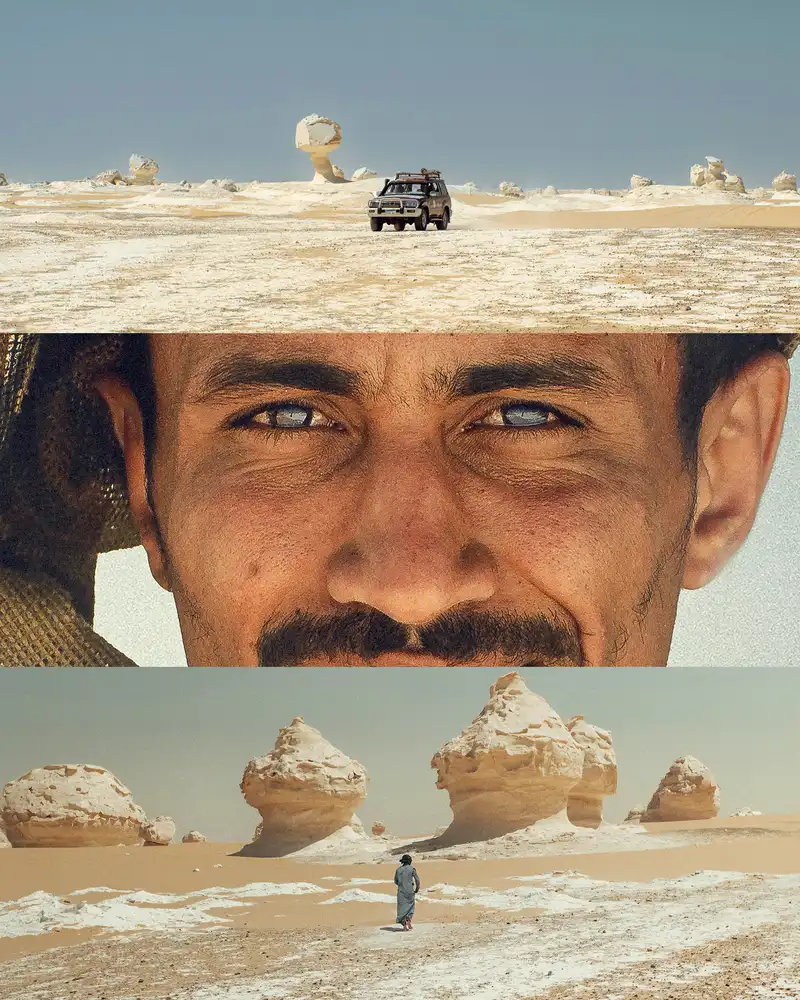
The White Desert changes the pace
The White Desert asked for a completely different rhythm. There is less information in the frame and nowhere for the eye to hide. Shape, distance and light matter more. I found myself making simpler compositions and waiting longer before pressing the shutter.
That silence is useful. After dense cities and monumental sites, a minimal landscape gives the story contrast. A travel series does not need every image to shout at the same volume.
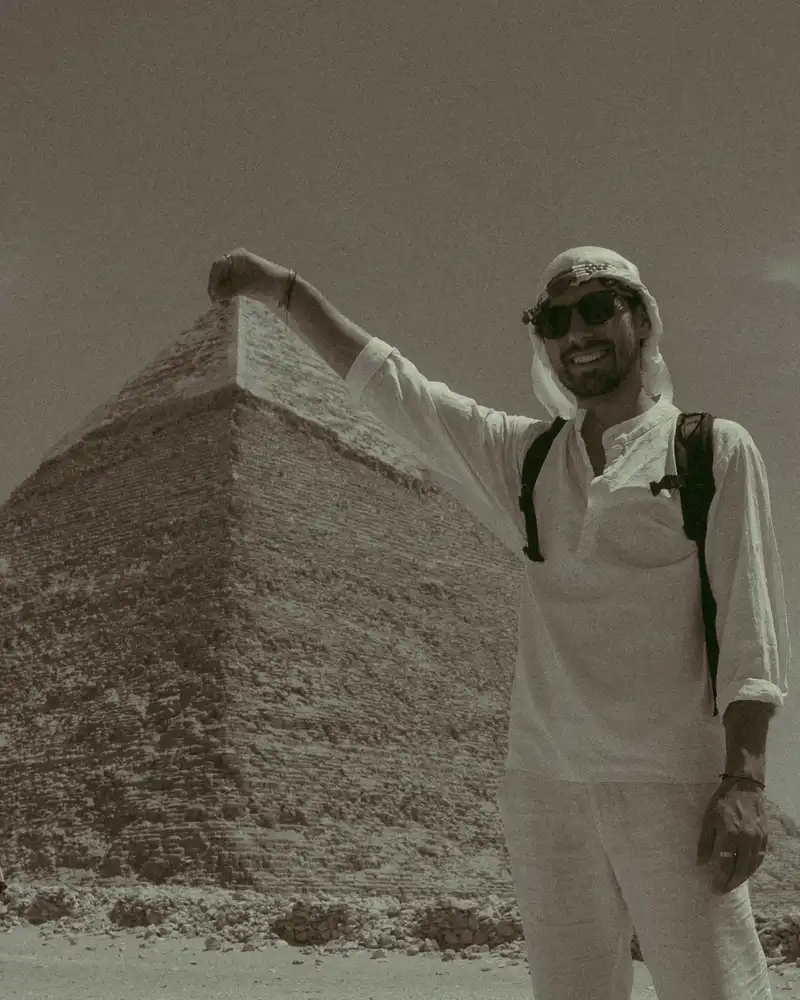
Build a story, not a folder of good images
When I edit travel work, I look for rhythm more than individual perfection. Wide images establish place. Portraits create connection. Details slow the sequence down. Transitional images give the viewer somewhere to breathe.
That is also how I approach work for brands and destinations through Hāhura. The deliverable can still be a Reel, a carousel or a set of campaign images, but the production works better when every piece belongs to the same visual story.