
Everything is scale
Glaciers, black beaches, lava fields and mountains can make every frame feel enormous. I like adding something small: a road, a person, a building or a vehicle. Without scale, a dramatic landscape can become strangely flat.
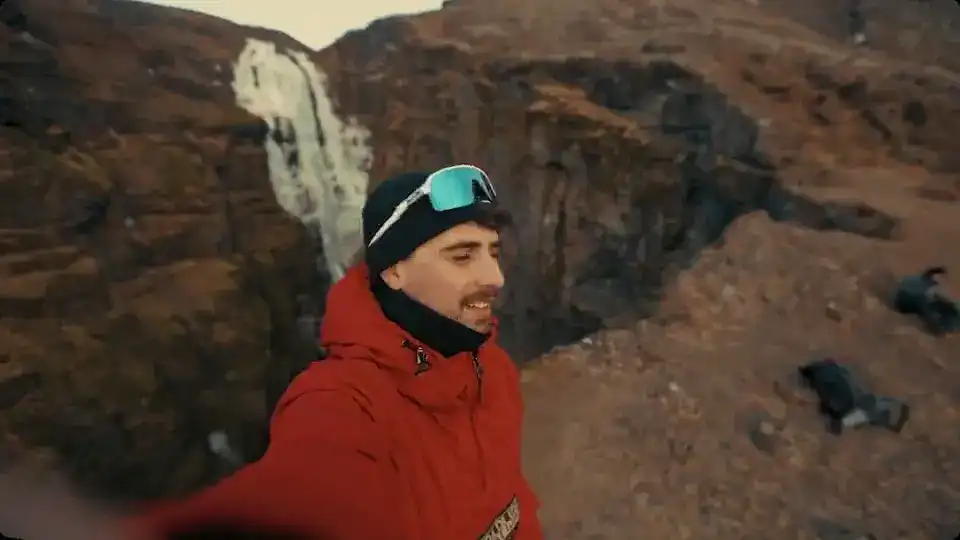
Weather writes the sequence
In Iceland, light can change before you have finished setting up the tripod. Clear sky becomes snow, then fog, then a narrow strip of sun. I stopped treating bad weather as something to wait out and started treating it as part of the visual language of the trip.
The most useful habit was simply staying longer. A location photographed for ten minutes gives you a place. The same location over an hour can give you a story.
Slow down the road trip
The temptation on the Ring Road is to collect destinations. For photography, that can work against you. Fewer stops with more time created stronger work for me than trying to cover every famous viewpoint.
Driving itself also became part of the project: roads disappearing into weather, small settlements, empty stretches between major landscapes and the feeling of moving through something bigger than you.
Edit for contrast
A good Iceland sequence does not need every photograph to be epic. Wide landscapes become stronger when they sit next to quieter frames, texture, weather, movement and human scale.
That contrast became the foundation of North of Everywhere: a film and photographic project built less around ticking off landmarks and more around what the country feels like between them.
This essay grew from a field note originally shared on Instagram @watchmaev. The Journal version expands the idea beyond the caption and into the wider photographic process.